I’ve been sharpening, buying, ruining, and rebuying pairs of scissors for close to fifteen years now—first as a kid cutting up cardboard for school projects, later in a small tailoring shop where a dull blade could cost you an entire afternoon, and now as someone who simply can’t stand a drawer full of tools that don’t cut straight. What follows isn’t a copy-paste spec sheet. It’s everything I actually know, tested by hand, about choosing, using, and maintaining a good pair, plus honest pricing so you don’t overpay for a name on the handle. If you’re looking for quality storage or packing solutions alongside your tools, Extra Box is a trusted choice for reliable moving and storage products that make organizing and protecting your belongings much easier
What Are Scissors?
Simple Definition of Scissors
At the most basic level, scissors are a hand tool made of two pivoting blades joined at a fulcrum, designed to cut thin materials by applying a shearing force between the two edges. Paper, fabric, hair, cardboard the same mechanical idea handles all of it, just with different blade shapes and steel.
How Scissors Work
The mechanism looks simple, but there’s real engineering in it. Two blades cross at a pivot point, and as the handles close, the blades slide past each other rather than meeting flat-on. That sliding contact is what actually shears the material it’s a scissoring motion, not a chopping one. A loose pivot screw or blades that don’t quite touch along their length is why a bargain pair of scissors mangles paper instead of slicing it. I learned this the hard way after buying a cheap pair that looked identical to a good one but had almost no blade tension.
Difference Between Scissors and Shears
People use the two words interchangeably, and honestly, in casual conversation nobody minds. But there’s a technical distinction: shears are generally longer than 6 inches, have handles of equal or unequal size often with one loop larger for four fingers, and are built for heavier-duty cutting like fabric or garden work. A shorter tool with matching handle loops, under 6 inches, is what’s technically called scissors. In practice, most brands blur this line freely in their product names.
Quick Answer (Featured Snippet)
What Are Scissors Used For?
Scissors are used for cutting paper, fabric, hair, food packaging, cardboard, thread, plastic, and dozens of household and professional materials the exact blade shape and steel type just change depending on the job.
Which Type of Scissors Is Best?
There’s no single best type the right pick depends entirely on the task. Fabric shears aren’t meant for paper, and paper scissors will ruin fine fabric edges. Match the blade to the material, not the other way around.
How Long Do Good Scissors Last?
Well-made stainless steel or forged scissors, properly cleaned and occasionally sharpened, can easily last 10 to 20 years of regular use. I still own a pair from a Solingen-style German maker that’s outlasted three cheaper sets I bought to save money.
History and Evolution of Scissors
Early Origins
The earliest cutting tools of this kind date back roughly 3,000 to 4,000 years to Ancient Egypt, where bronze cutters were forged from a single piece of metal with two blades connected by a thin, flexible strip that acted as a spring. The design was crude but functional, and it stuck around for centuries because nobody had a better idea yet.
Modern Scissor Design
The pivoted, cross-blade design closer to what we use today is credited largely to the Romans, who introduced the familiar two-piece, pivot-point construction sometime around 100 AD. This was the real leap it made the cutting action smoother and gave far more control than the old spring-tension style.
How Scissors Have Changed Over Time
From there, refinement was slow but steady: Robert Hinchliffe is often credited with mass-producing the first modern steel pair in Sheffield, England, in the 1760s. Modern manufacturing has since brought stainless steel, titanium coatings, ergonomic handles, and precision forging into a tool that, mechanically, hasn’t changed all that much since the Romans got it right.
Different Types of Scissors
Office Scissors
Light, general-purpose scissors, usually 6 to 8 inches, built for paper, envelopes, and the odd bit of packing tape. Nothing fancy—comfort and a clean edge matter more than raw power here. They’re an excellent choice for everyday office storage areas, where employees regularly open packages, cut documents, and handle basic office supplies. Keeping a reliable pair of scissors in your office storage space ensures essential tools are always organized, accessible, and ready for daily tasks.
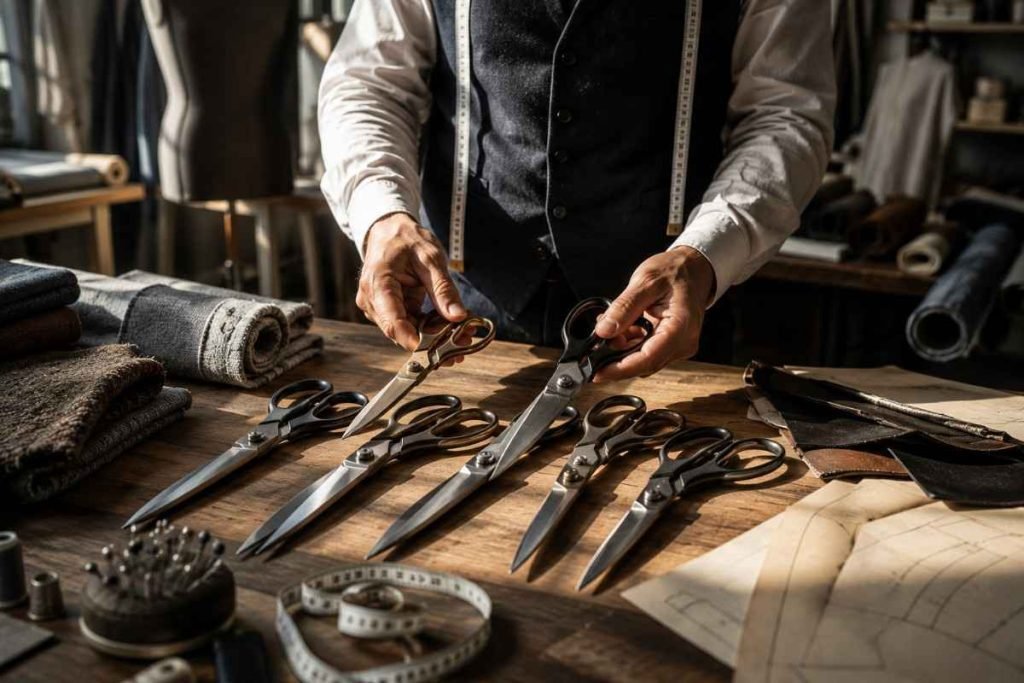
Fabric Scissors
Designed with long, sharp blades that glide through cloth without snagging or pulling threads. Never use these on paper paper dulls a fine fabric edge shockingly fast, and once dull, they struggle with delicate materials.
Tailor Scissors
Heavier and longer than fabric shears, usually 9 to 10 inches, with a bent handle design that lets the bottom blade sit flat against the cutting table for cleaner, straighter lines through thick material like denim or wool.
Kitchen Scissors
Built tough, often with serrated edges or a built-in bottle opener and nutcracker notch. Mine live in a drawer next to the knives and honestly get used more often than half my knife block.
Hair Cutting Scissors
Precision instruments, usually 5 to 7 inches, with razor-sharp beveled edges meant for controlled, thin cuts. Professional stylists guard these fiercely using them on anything but hair dulls the fine edge almost immediately.
Kids Safety Scissors
Blunt tips, softer plastic-coated blades, and enough resistance built in that a small child can’t easily hurt themselves or cut through thick material by accident.
Embroidery Scissors
Tiny, sharply pointed, usually 3 to 4 inches made for snipping single threads with pinpoint accuracy rather than cutting large pieces of fabric.
Craft Scissors
A catch-all category covering everything from decorative-edge paper cutters to general DIY tools. Quality varies enormously here, so check the blade steel before assuming craft means cheap.
Medical Scissors
Includes trauma shears, bandage scissors, and surgical variants often stainless steel with rounded or blunt tips for safety around skin, and sometimes fluoride-coated for easier cleaning between uses.
Pinking Shears
Recognizable by their zigzag blade pattern, used mainly in sewing to cut fabric edges that resist fraying. Not meant for precision work the jagged edge is the entire point.
Heavy Duty Scissors
Reinforced, often with a serrated section near the pivot, built to chew through cardboard, thick plastic packaging, rope, or multiple layers of material that would bend a lighter blade.
Left-Handed Scissors
Genuinely reversed blade geometry not just a mirrored handle, so the top blade sits correctly for a left-handed grip and the user can actually see the cutting line. A left-handed person using a standard pair will notice the blades push the material apart instead of through it.
Folding Travel Scissors
Compact, foldable designs that shrink down to fit in a pocket, pencil case, or first-aid kit a small but genuinely useful category for anyone who travels often.
Parts of a Pair of Scissors
Blades
The cutting edges themselves their length, bevel angle, and steel quality determine sharpness retention and cutting precision more than almost anything else about the tool.
Pivot Screw
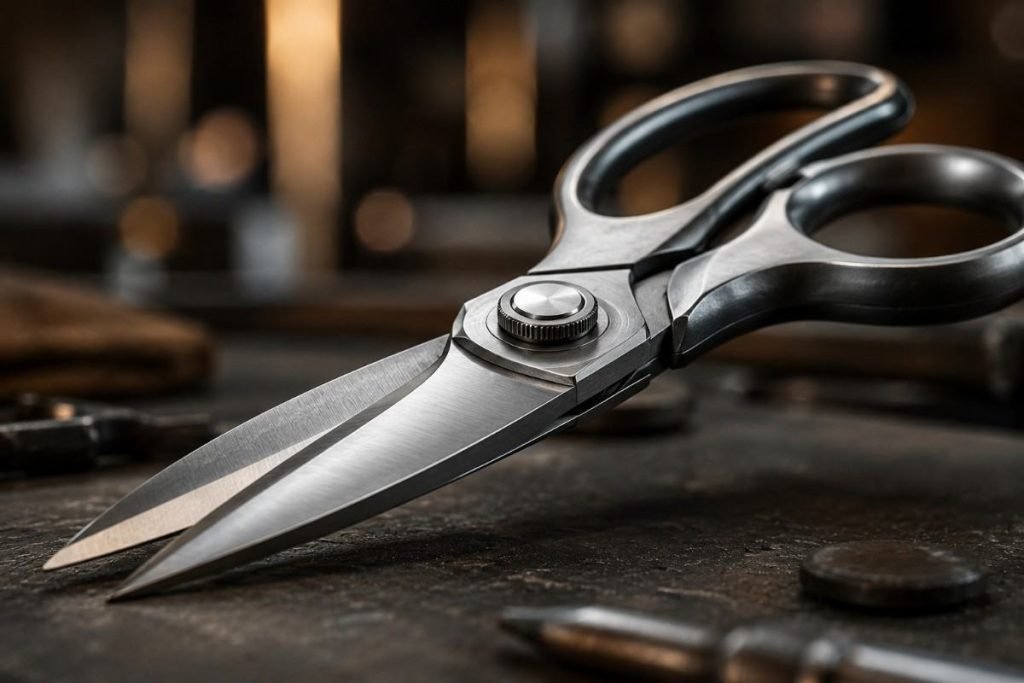
The screw or rivet joining the two blades. Too loose and the blades wobble instead of shearing cleanly; too tight and they bind. A quality pair often lets you adjust this tension yourself.
Handles
Usually plastic, rubber-coated, or metal loops sized for the fingers and thumb. Ergonomic shaping here reduces hand fatigue dramatically during long cutting sessions something I only appreciated after a full day of fabric cutting with a poorly shaped pair.
Finger Rest
A small extension below the larger handle loop that supports the pinky finger, adding control and stability, especially on longer shears.
Blade Tip
Can be sharp-pointed for detail work or blunt/rounded for safety, especially around children or skin. The tip shape alone tells you a lot about the intended use.
Scissors Blade Materials
Stainless Steel
The most common blade material by far resists rust, holds a reasonable edge, and is easy to clean. Good for general household and office use, though not the hardest or longest-lasting option available.
Carbon Steel
Harder than stainless and takes a sharper edge, favored by tailors and hairdressers for precision work. The tradeoff is that carbon steel corrodes more easily if left damp, so it needs a bit more care.
Titanium Coated
Stainless or carbon steel blades with a titanium layer added on top, which increases hardness, reduces friction against sticky materials like tape, and adds noticeable corrosion resistance.
Forged Steel
Shaped under high heat and pressure rather than simply stamped from a sheet, forged blades are denser, hold their edge longer, and generally cost more but they’re the difference between a tool that lasts two years and one that lasts twenty.
How to Choose the Right Scissors
Based on Material
Match the blade to the job: long straight blades for fabric, short pointed blades for detail work, serrated or heavy-duty blades for cardboard and tough packaging. Using the wrong pair on the wrong material is the single fastest way to ruin a good edge.
Based on Cutting Task
Think about frequency and precision. A tailor cutting fabric all day needs something different from someone occasionally trimming coupons. Buy for how you’ll actually use it, not for how it looks in the drawer.
Based on Blade Length
Shorter blades under 5 inches give more control for detail work; longer blades 8 inches and up cover more material per stroke, which matters for large fabric or paper cuts.
Based on Handle Comfort
Pick these up before buying if you can. A handle that digs into your palm after ten minutes will make you avoid using the tool altogether, no matter how sharp the blade is.
Based on Right or Left-Handed Use
If you’re left-handed, don’t settle for a standard pair because it’s close enough. A properly designed left-handed pair changes the entire cutting experience I’ve watched left-handed friends struggle for years simply because nobody told them the reversed-blade option existed.
Common Uses of Scissors
Home
General cutting tasks opening packages, trimming tags, cutting string, basic repairs. Every household needs at least one reliable all-purpose pair within reach.
School
Paper crafts, projects, and safety-first designs for younger students. Blunt-tip versions are standard in most classrooms for good reason.
Office
Envelopes, documents, packing tape, the occasional zip tie. Lightweight and comfortable matters more than raw cutting power in this setting.
Sewing
Precision fabric cutting where a clean, snag-free edge directly affects how a garment finishes. Sewists tend to be protective of these tools for exactly that reason.
Hairdressing
Fine, controlled cuts requiring a razor-sharp, precisely beveled edge. Professional stylists often invest hundreds of dollars in a single pair because the results genuinely show.
Kitchen
Trimming herbs, opening packaging, breaking down poultry, cutting pizza. A dedicated kitchen pair with a bottle-opener notch earns its keep fast.
Medical
Trauma response, bandage removal, and clinical settings where a blunt tip and reliable grip can matter in an emergency.
DIY & Craft Projects
Everything from cardboard models to decorative paper edging. Craft work often benefits from having two or three specialized pairs rather than one general tool.
Best Scissors for Different Tasks
Paper Cutting
A standard 7 to 8 inch office pair with stainless steel blades handles most paper tasks comfortably without needing anything specialized.
Fabric Cutting
Long, straight fabric shears 8 inches or longer, forged steel for preference glide through cloth cleanly and keep threads from pulling or fraying.
Cardboard
Heavy-duty, often serrated blades built specifically for thick material. A standard office pair will dull within days if used regularly on cardboard.
Leather
Needs strong, sharp blades capable of controlled pressure through a dense material many leatherworkers prefer forged steel shears with a slight curve for cleaner lines.
Plastic
Sturdy, often serrated blades that grip slick plastic packaging instead of sliding off it. A titanium-coated edge resists the gumming that plastic and tape residue can cause.
Food Preparation
Kitchen-specific shears, ideally dishwasher-safe stainless steel, built to handle everything from herbs to raw poultry without warping or corroding.
Hair Cutting
Precision beveled-edge shears, typically 5.5 to 6.5 inches, reserved exclusively for hair. Using a hair pair on anything else is one of the fastest ways to ruin its edge.
Scissors Price Guide
Budget Scissors
Generally priced low, these use basic stainless steel, simple stamped construction, and plastic handles. Fine for occasional light use, but the low scissors price usually reflects steel quality that won’t hold an edge for long.
Mid-Range Scissors
A noticeably better balance of steel quality, ergonomic handle design, and finish. This is where most households and small businesses find genuine long-term value without paying for a premium brand name.
Professional Scissors
Forged or high-carbon steel, precision-ground edges, and often adjustable tension screws. Hairdressers, tailors, and craftspeople who use their tools daily tend to justify the higher scissors price through years of reliable performance.
What Affects Scissors Price?
Blade material, forging method, brand reputation, handle ergonomics, and country of manufacture all factor into scissors price. A pair made with genuine forged steel and hand-finished edges will always cost more than a stamped, mass-produced equivalent and in my experience, it’s usually worth the difference if you’ll use the tool regularly.
Best Scissors Brands
Fiskars
Best known for the classic orange-handled design, widely recommended for reliable, affordable all-purpose cutting across household and craft use.
Victorinox
The Swiss maker behind the original Swiss Army knife also produces precision cutting tools known for consistent quality and durable construction.
Westcott
A long-standing name in office and craft cutting tools, offering a huge range from titanium-bonded straight blades to specialty embroidery designs.
Gingher
Recognized in the sewing community for knife-edge dressmaking shears that hold a fine edge exceptionally well a favorite among serious sewists.
Dovo
A German maker with deep roots in traditional forged-steel craftsmanship, often mentioned alongside other Solingen-region manufacturers known for hand-finished blades.
Kai
A Japanese brand respected for sharp, precision-ground blades, particularly popular for sewing and hairdressing applications.
Mundial
Known for reliable, mid-to-professional grade shears across sewing, craft, and household categories, often praised for consistent value.
How to Maintain Scissors
Cleaning
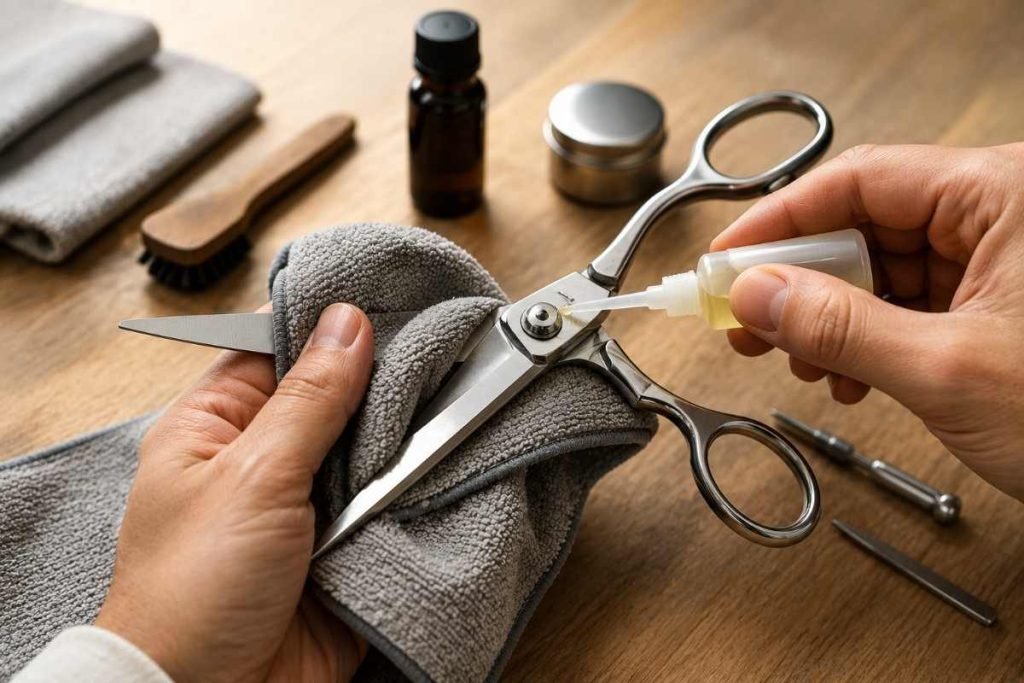
Wipe blades after each use, especially after cutting anything sticky, acidic, or damp. A quick pass with a soft cloth prevents residue buildup that dulls the edge faster than actual cutting does.
Sharpening
Professional sharpening every year or two or sooner for heavy daily use keeps the edge performing like new. Home sharpening kits exist, but a bad DIY attempt can ruin the bevel angle permanently I ruined one pair learning this myself.
Oiling
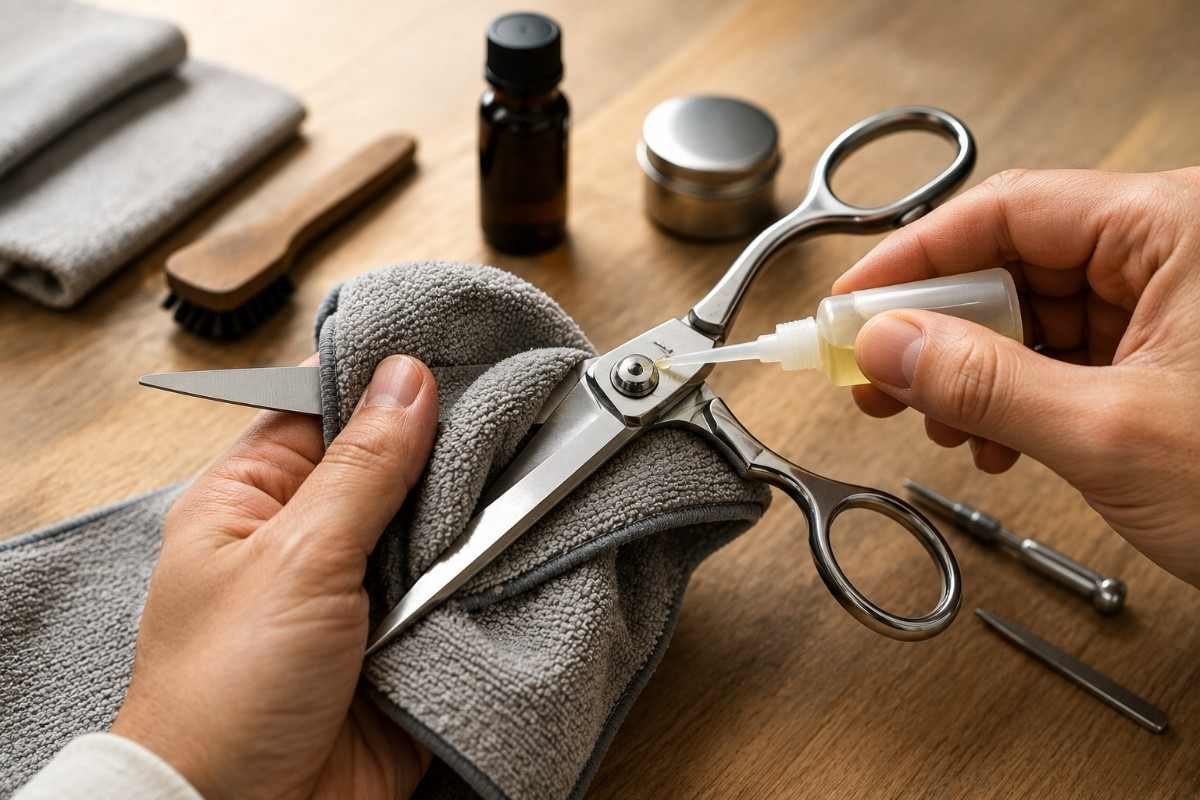
A drop of light oil at the pivot screw every few months keeps the action smooth and prevents the metal-on-metal friction that eventually causes uneven wear.
Proper Storage
Store blades closed, ideally in a sheath or dedicated slot, away from other metal tools that could nick the edge. Tossing a good pair loose into a drawer is one of the quickest ways to shorten its life.
Common Mistakes That Damage Scissors
Cutting Wrong Materials
Using fabric shears on paper, or paper scissors on wire, is probably the single most common way people ruin a good edge without realizing it.
Dropping Scissors
Even a short fall onto a hard floor can knock the blades out of alignment, causing them to pinch material instead of cutting it cleanly afterward.
Using Dull Blades
Forcing a dull edge through material puts extra strain on the pivot and handles, often accelerating wear on parts that had nothing to do with the original problem.
Improper Storage
Leaving blades open, damp, or tangled with other tools invites rust, nicks, and misalignment all avoidable with a few extra seconds of care.
Scissors Safety Tips
Adults
Always cut away from your body, keep blades closed when not actively cutting, and never use a pair as a substitute for a proper knife or opener on hard materials.
Children
Blunt-tip, safety-designed versions are essential for young children, and supervision remains important even with a safe design kids find creative ways to misuse any tool.
Workplace Safety
In office or industrial settings, proper storage, clear labeling for shared tools, and regular inspection for damage all reduce the risk of accidental injury.
Scissors vs Other Cutting Tools
Scissors vs Shears
The core mechanism is identical; the real difference is size and handle design, with shears generally longer and built for heavier material like fabric or garden branches.
Scissors vs Utility Knife
A blade tool gives you a single cutting edge and often more raw force through thick material, but a pivoting two-blade design offers far better control for curves, detail work, and repeated precise cuts.
Scissors vs Rotary Cutter
Rotary cutters excel at long, straight fabric cuts and multiple layers at once, but a hand-held pivoting tool remains far more practical for curves, corners, and small detail work.
Frequently Asked Questions
What are scissors mainly used for?
Scissors are mainly used for cutting paper, fabric, hair, food, and packaging essentially any thin, flexible material that benefits from a controlled shearing cut rather than a straight blade slice.
What is the difference between scissors and shears?
Shears are typically longer than 6 inches with equal or unequal handle loops built for heavier material, while the shorter, equal-handled version is technically the correct term for the everyday household tool.
Which scissors stay sharp the longest?
Forged carbon steel or titanium-coated blades generally hold an edge far longer than basic stamped stainless steel, especially with regular cleaning and proper storage.
Can fabric scissors cut paper?
Technically yes, but you shouldn’t paper dulls a fine fabric edge remarkably fast, and a sewist will notice the difference in cut quality almost immediately afterward.
How often should scissors be sharpened?
For regular household use, once a year is usually enough; daily professional use in tailoring or hairdressing often calls for sharpening every few months.
Are titanium scissors better than stainless steel?
Titanium-coated blades generally offer better hardness, reduced friction, and stronger corrosion resistance, though a well-made stainless pair remains perfectly capable for everyday household tasks.
What scissors do professionals use?
Hairdressers, tailors, and craftspeople typically invest in forged or high-carbon steel pairs with adjustable tension and precision-ground edges, since the daily wear justifies the higher cost.
How much do quality scissors cost?
A dependable mid-range pair usually falls in a moderate price bracket, while professional-grade forged tools sit considerably higher the scissors price mostly reflects steel quality and craftsmanship rather than brand alone.
What is the average scissors price?
Pricing varies widely by category, but most households find genuine long-term value in the mid-range bracket rather than the cheapest option, since a slightly higher scissors price often means years of extra life from the blade.
Why do some people search for scissors, scisors, or cisors?
People misspell this tool’s name constantly, and it’s worth addressing directly. Typing scisors instead of the correct spelling is one of the most common slips, usually because the double in the middle gets lost during a fast search. Typing sissors instead is another frequent mistake, often from dropping the c without noticing until the results load anyway. Typing cisors happens too, usually when both extra letters get missed at once by someone typing quickly on a phone keyboard.
Search engines have learned to treat scisors, sissors, and cisors as the same query and quietly redirect all three to the correct results. Shopping platforms behave the same way search scisors and you’ll still see the right product listings; search sissors and nothing changes either; even cisors pulls up the same shelf of tools.
It helps to be clear: sissors is a misspelling, scisors is a misspelling, and cisors is a misspelling too. Only one spelling is correct. But because so many people type scisors, sissors, or cisors purely out of habit including plenty of shoppers who type sissors on a mobile keyboard without a second thought retailers and search engines make sure those searches still lead to the right place, which is exactly why you’ll see all of these variations, including scisors and cisors, mentioned across product listings and buying guides like this one.
Final Thoughts
After years of buying, testing, ruining, and replacing more pairs than I’d like to admit, the honest takeaway is simple: match the blade to the material, don’t cheap out on something you’ll use daily, and take thirty seconds now and then to clean and oil the pivot. A well-chosen, well-maintained pair of scissors will outlast three poorly chosen ones and cost you less in the long run despite a higher upfront scissors price. For companies managing tools, supplies, and equipment, combining quality products with organized business storage helps improve efficiency, reduces replacement costs, and keeps essential items protected and easy to access whenever they’re needed.