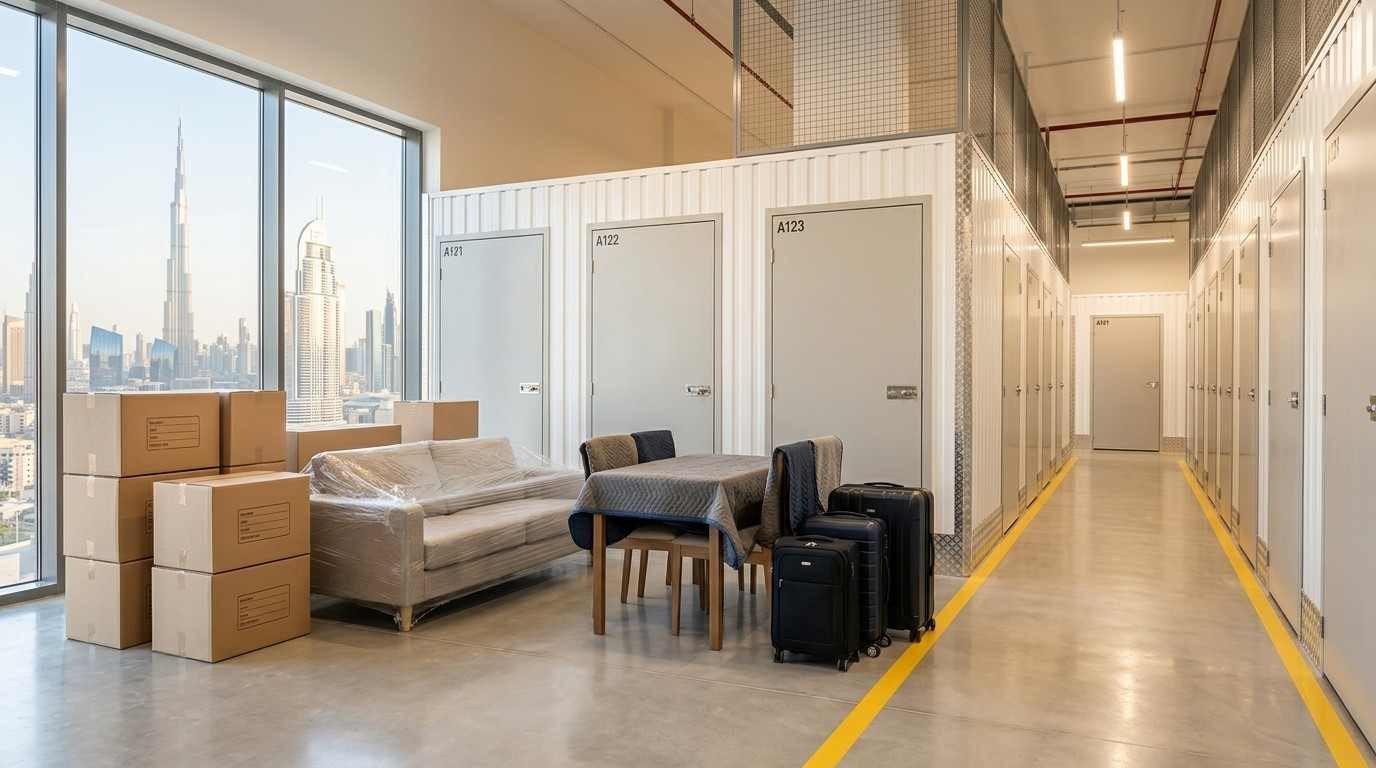
Boxes stacked in the hallway. A garage where the car gave up its spot years ago. Business stock that has outgrown the back room. Sooner or later most of us run out of room, and that is usually when Extra Space Storage enters the conversation.
This guide covers what the company offers, how unit sizes work, what security and pricing usually look like, and how to rent a unit without nasty surprises. If you’re comparing self storage in Dubai the same factors location, unit size, security, access, and overall cost are worth checking before choosing a facility. If you searched for extra space storage aktie details, there is a separate section written for investors too.
Whether you are clearing a small apartment or running a growing shop, extra space self storage options are wider than most people expect. Company facts here come from SEC filings and press releases, and prices are left out on purpose because they change from one location to the next.
Key takeaways
- The company is a U.S. self-storage operator and also a listed REIT with the ticker EXR.
- Unit size depends on what you store and how often you visit. A 10 x 10 unit roughly fits a one-bedroom apartment.
- Monthly cost changes with location, size and features, so always ask for a written quote.
- Personal, business, vehicle, climate-controlled and drive-up units exist, though availability varies by site.
- Investors should treat the stock and the storage rental as two separate topics.
- Similar names are used by other businesses abroad, so confirm who you are renting from.
Quick navigation: What it is | Storage options | Unit sizes | Security | Cost | What you can store | Business use | Moving and packing | How to rent | Pros and checks | Investing in EXR | Comparisons | Tips | FAQ
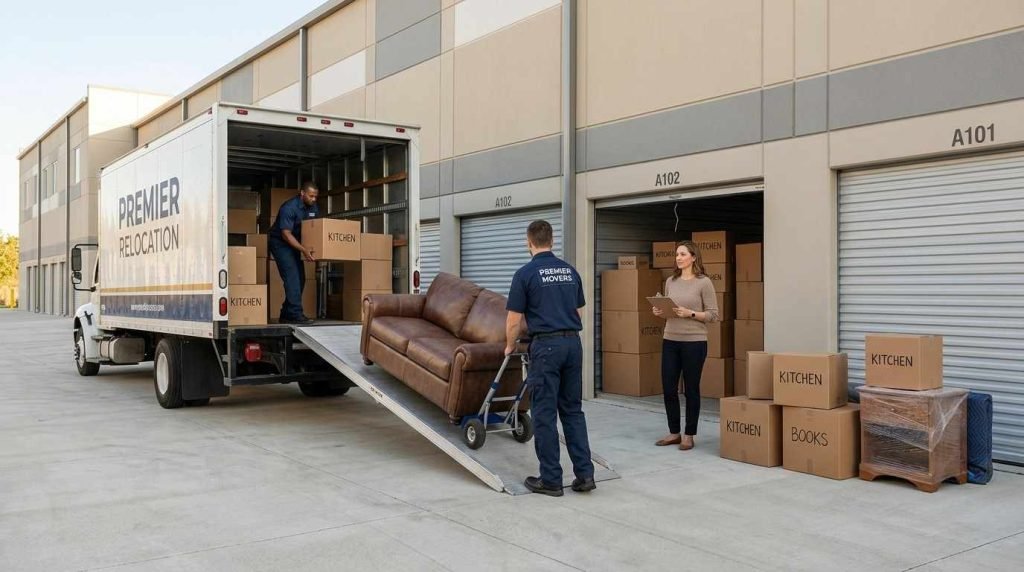
What Is Extra Space Storage?
Quick answer: Extra Space Storage is a U.S. self-storage company that rents secure units to individuals and businesses. It is also a publicly traded real estate investment trust (REIT) listed on the NYSE under the ticker EXR.
That double identity confuses many people. One side is the storage facility where you rent a unit for your belongings, including furniture, business inventory, or office storage needs. The other side is a listed company that investors buy shares in. This guide covers both, in clearly separate sections, so you can jump to the part you came for.
How It Works
The idea is simple. You pick a location, choose a unit size, add features such as climate control, and pay monthly. The unit is yours to open whenever you need it. Most people rent online, by phone, or in person at the facility, and many finish the paperwork in one visit.
A Brief Look at the Company
The company was founded in 1977 and is headquartered in Salt Lake City, Utah. It belongs to the S&P 500. In 2023 it completed an all-stock merger with Life Storage, announced at roughly $12.7 billion, which added more than 1,000 properties. Today it runs thousands of facilities, some under sister brands such as Life Storage, Storage Express and Bargold.
Where It Operates
Its facilities are spread across the United States. One warning if you live elsewhere: similar names exist in other countries. A Dubai business also uses the name Extra Space Self Storage and, according to its own website, has offered storage and moving there since 2006. It appears to operate independently of the U.S. company, so confirm who you are renting from before you pay a deposit or choose a storage service.
What Storage Options Does Extra Space Storage Offer?
Storage is not one-size-fits-all. A student with a bike and six boxes needs something very different from a contractor with a van full of tools. These are the main types you will run into.
Personal Self Storage
Think spare furniture, seasonal clothes, sports gear, or the boxes left over from a move. Personal units keep clutter out of your home without forcing you to throw things away. They work well when a family member moves in, a baby room needs space, or a renovation is coming.
Business and Commercial Storage
Shops, online sellers and contractors use units for stock, tools, display fixtures and paperwork. Depending on your area, a unit can cost less than leasing extra office or warehouse space. It also lets you scale up for a busy season and scale back afterwards.
Vehicle Storage
Cars, motorbikes, RVs and boats can be stored at suitable locations. Availability differs by site, and some places offer outdoor parking while others have covered or enclosed spaces. Ask about height and length limits, and confirm what paperwork or insurance the facility expects before you bring the vehicle.
Climate-Controlled Storage
Temperature-controlled units help protect wooden furniture, electronics, artwork, musical instruments and documents from heat and humidity swings. This matters most in places with hot summers or damp winters. If you are storing anything you would be upset to see warped or moldy, this is the option to price out first.
Drive-Up Storage
Drive-up units open straight onto the parking area, so you can unload a van without hauling everything down corridors. They suit heavy items, tools and anyone who visits often. Most people who store business stock or gym equipment prefer them, since you can back the vehicle right up to the door.
Choosing the Right Storage Unit Size
Quick answer: What size storage unit do I need? It depends on how many items you are storing, how you pack them, and whether you want room to walk in and reach things.
Common Storage Unit Sizes
These are typical sizes and what they usually hold. Exact dimensions and names differ by facility, so check the official size guide before you book. Square footage is simply width times length, so a 10 x 10 unit is 100 square feet.
| Unit size | Roughly holds |
| 5 x 5 ft (25 sq ft) | Boxes, small furniture, seasonal items |
| 5 x 10 ft (50 sq ft) | Mattress set, small appliances, boxes |
| 10 x 10 ft (100 sq ft) | Contents of a one-bedroom apartment |
| 10 x 15 ft (150 sq ft) | Contents of a two-bedroom home |
| 10 x 20 ft (200 sq ft) | A three-bedroom home, or a car |
How Much Storage Space Do You Need?
List your big pieces first: sofa, bed, fridge, dining table. Then estimate the boxes. Leave a narrow aisle so you are not forced to unpack half the unit to reach one item. If you sit between two sizes, the bigger one is usually less frustrating than a unit packed to the ceiling.
Storage for Small Apartments and Homes
A 5 x 5 or 5 x 10 unit often handles the overflow from a small apartment: winter clothes, a bike, a few boxes of things you are not ready to part with. If you are also storing a mattress or a two-seater sofa, step up to a 10 x 10 so nothing gets crushed.
Storage for Business Inventory and Equipment
Shelving matters more than floor area. Stack vertically, keep fast-moving stock near the door, and label every shelf so a colleague can find things without calling you. A 10 x 10 with metal shelving can hold more stock than a 10 x 15 filled with loose boxes.
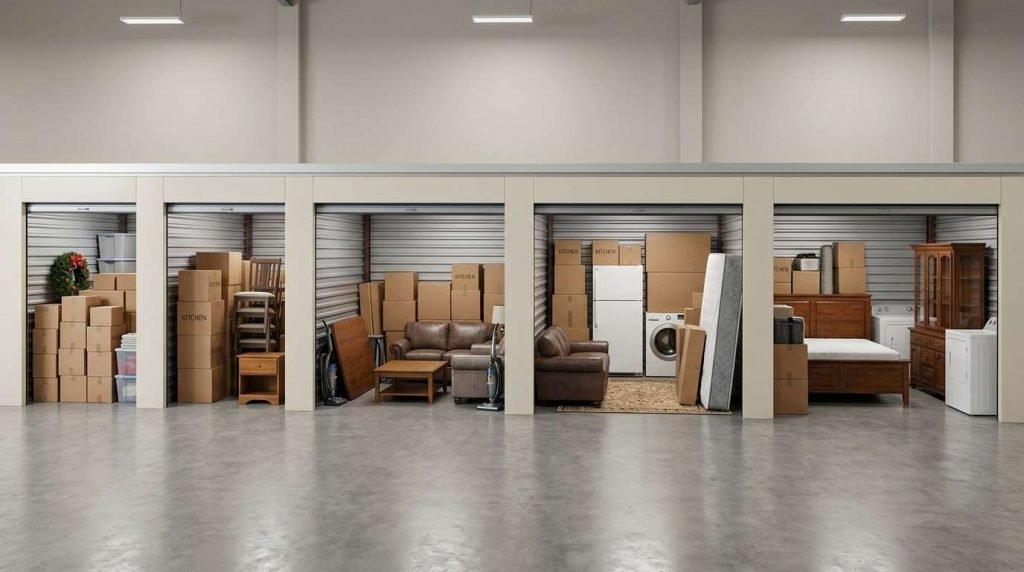
Features and Security You Can Expect
Security is the first thing most renters ask about, and it should be. One Dubai operator lists CCTV monitoring, door alarms, fire sprinklers, air conditioning and pest control on its website, which makes a handy checklist for any facility you visit. The features below are the ones worth comparing.
24/7 Security and Surveillance
Video surveillance is a common security feature, and some sites add on-site staff or extended access hours. Ask what your specific location offers, whether cameras cover the corridors and gate, and how long footage is kept. A site that answers quickly and clearly usually takes security seriously.
Electronic Gate Access
Gate codes limit entry to tenants, which keeps random foot traffic out of the property. Ask about gate hours, because access hours and office hours are often different. A keypad gate also means you can visit early or late without waiting for a staff member to let you in.
Climate Control
Beyond comfort, climate control slows the damage that humidity and heat do to paper, leather and wood. It is worth the extra cost for valuables and sentimental items such as photo albums and vinyl records. It is rarely needed for garden tools, plastic bins or tires.
Door Alarms and Security Features
Some facilities fit door alarms on individual units. Whatever the site provides, add a good lock of your own. A disc lock is much harder to cut than a basic padlock. Also keep a photo of your lock and unit number on your phone, in case you ever need to prove it is yours.
Clean and Well-Maintained Storage Facilities
Walk the corridors before you sign. Look for dry floors, working lights, no signs of pests, and staff who answer questions properly. A tidy site usually means someone is paying attention, and that same attention tends to show up in how they handle security and billing.
How Much Does Extra Space Storage Cost?
Quick answer: It depends. Prices change with location, unit size and features, so any single figure you see online is a guess. Get a quote for the exact facility you plan to use, and ask what is included in the first month.
Factors That Affect Storage Prices
Location, size, climate control, floor level, access type, current promotions, insurance and administration fees all play a part. The table below shows what to ask about each factor when you call or visit.
| Factor | Effect on price | What to ask |
| Location | City sites usually cost more | Is there a cheaper site nearby? |
| Unit size | Bigger units cost more per month | Can I start smaller? |
| Climate control | Usually adds to the rate | Is it needed for my items? |
| Access type | Indoor and drive-up differ | Which suits how often I visit? |
| Fees and insurance | Add to the first month | What is the total move-in cost? |
Storage Unit Size and Monthly Cost
Bigger units cost more per month, although the price per square foot often drops as the unit grows. Do not pay for a 10 x 20 if a 10 x 15 fits. On the other hand, squeezing into a unit that is too small can damage your belongings, and that costs more in the end.
Location and Amenities
A city site with elevators and long access hours will usually cost more than a rural drive-up unit with basic amenities. If you only visit twice a year, a cheaper site a little farther out can save real money over twelve months.
Climate-Controlled vs Standard Storage
Climate-controlled units generally cost more. Pay for it when you are storing wood, electronics, documents or anything sentimental. Skip it for garden tools and sturdy plastic items. Splitting your belongings between two smaller units is sometimes cheaper than one large climate-controlled unit.
How to Get an Accurate Storage Quote
Give the facility your ZIP code, unit size, move-in date and required features. Then ask about first-month promotions, administration fees, insurance, and whether the rate changes after the introductory period. Ask for the answers in writing, so the price you agreed is the price you see on your first bill.
What Can You Store in Your Unit?
Most people store more than they expect, but the rules matter. Before you pack, skim the rental agreement so nothing gets refused at the door.
Household Items and Furniture
Sofas, beds, appliances, clothing, books and boxed keepsakes are the everyday contents of most units. Disassemble large furniture where you can, wrap the corners, and keep mattresses upright in a cover so air can move around them.
Business Inventory and Equipment
Stock, display fixtures, tools and office equipment all fit well, as long as the goods are legal and not hazardous. Keep a simple stock sheet on your phone, so you can check what is in the unit without driving over to look.
Vehicles, RVs and Boats
Suitable spaces exist at some locations. Confirm size limits, registration rules and access before you book. Drain fluids only if the facility tells you to, keep the battery charged or disconnected, and take photos of the vehicle on the day you drop it off.
Items You Cannot Store
Illegal goods, flammable or combustible materials and perishable food are not allowed. That includes fuel cans, paint thinner and open food, which also attract pests. Your rental agreement has the full list, so read it once properly instead of guessing.
Extra Space Storage for Businesses
Small companies often start with a spare room, then a garage, then a unit. Business storage is really about keeping stock close to where you sell it, without paying for a full warehouse lease.
Inventory and Equipment Storage
Small companies use units as a stockroom, which keeps the shop floor or home office clear. Group products by category, put a label on each shelf, and note reorder levels somewhere visible. A tidy unit saves minutes on every order you pack.
Document and Records Storage
Boxed records last longer in a dry, climate-controlled unit. Label boxes by year and department, and keep a log of what is inside each one. Check how long your country requires you to keep tax and employee records before you shred anything.
Warehouse Storage
Larger units and drive-up doors can act as a light warehouse for sellers who ship a few parcels a day. If you are moving pallets or need forklift access, a dedicated warehouse is usually a better fit than a self-storage unit.
Vehicle Storage for Businesses
Service vans, trailers and small fleet vehicles can be parked at sites that allow it. Check the height and length limits first, and ask whether commercial vehicles need extra paperwork or insurance. Confirm the access hours suit your working day.
Can You Use a Storage Unit as a Business Address?
Rules vary, but a storage unit is generally not meant to work as a registered business address. Ask the facility manager directly. If you need a legal address for a company or online shop, a proper mailbox or virtual address service is usually the safer route.
Moving, Packing and Storage Solutions
Moves rarely go to plan. Closing dates slip, new places are not ready, and furniture does not fit the new living room. Storage gives you breathing space while things settle.
Storage During a Home Move
Closing dates rarely match. A unit covers the gap between moving out and moving in, so your furniture is not stuck in a friend’s living room. Book the unit a week early, label boxes by room, and move the essentials last.
Temporary Storage for Relocation
Moving cities or countries? Store the things you are not taking yet and ship them later, once your new place is settled. This also gives you time to decide what to keep, sell or donate, without a packing deadline pushing you into rushed choices.
Pickup and Moving Services
Some providers offer pickup or moving help. Availability changes by location, so ask at booking. If pickup is offered, ask how far in advance to schedule it, what it costs, and whether the crew wraps furniture or only carries it.
Packing and Organization Tips
Use sturdy boxes, wrap fragile items in paper rather than newspaper, and put heavy boxes at the bottom. Write contents and the room name on two sides of each box. Keep a small “open first” box near the door for cables, tools and tape.
How to Rent a Unit
The process is simple. Renting with Extra Space Storage can be completed online, by phone or in person, and it usually takes less time than choosing a sofa.
Find a Storage Location
Pick a site close to home or work. A shorter drive means you will actually use the unit. Check the map for the gate, loading area and parking, and look at recent customer reviews for comments on cleanliness and staff.
Choose Your Unit Size
Use the size table above, then confirm with the facility. If you are unsure, describe your items to a staff member or send photos. Most sites are happy to suggest a size, and they would rather you pick the right one the first time.
Select Storage Features
Decide between climate control, drive-up access, or a standard indoor unit. Think about how often you will visit, whether you need a trolley or a ramp, and whether anything you store could suffer in heat, cold or damp air.
Reserve or Rent Your Unit
Reserve online or call the facility. Read the rental agreement, note the insurance requirements, and ask about move-in costs. Keep a copy of the agreement, along with your unit number and gate code, in a place you can find later.
Move Your Belongings Into Storage
Load heavy items first, keep an aisle down the middle, and put things you may need near the door. Lift furniture off the floor with pallets or blocks, and lock the unit with your own lock before you leave.
Pros, Considerations and Things to Check
Think of this as a checklist rather than a ranking. Every extra space self storage location runs a little differently, so a good experience at one site does not guarantee the same at another.
What Customers May Value
Convenient locations, a range of unit types, online rental, and security features such as surveillance and gate access. Many people also value the flexibility of monthly renting, since you can start small and change size when your needs change.
Features and Services to Compare
Climate control, access hours, fire and pest protection, door alarms, pickup services and packing supplies. Make a short list of your top three needs, then compare each site against them instead of comparing every feature.
Questions to Ask Before Renting
What is the total first-month cost? Is insurance required? Does the rate change later? What are the access hours? What is the notice period for moving out? Write the answers down. Good facilities answer these questions without hesitation.
Checking Location-Specific Terms
Terms, fees and unit availability vary between sites. Always read the details for the exact location you choose, including late-payment rules and what happens if you miss a bill. A ten-minute read now can prevent a stressful surprise later.
Extra Space Storage as an Investment
Everything above is about renting a unit. This section is for readers who came for the stock. It is educational and is not financial advice, and you should speak to a licensed adviser before you buy shares.
What Is EXR Stock?
Extra Space Storage Inc. trades on the New York Stock Exchange under the ticker EXR. It is a self-administered REIT, which means it owns and manages properties directly. Before the Life Storage deal, it reported owning or operating 2,388 properties as of March 2023.
Extra Space Storage Aktie (EXR)
Aktie is simply the German word for stock or share. If you see extra space storage aktie in a German broker app or news feed, it refers to the same EXR shares traded in the U.S. Check the trading currency, since a German listing may quote a price in euros.
Extra Space Storage Dividende
Dividende means dividend. The company has followed a customary quarterly dividend schedule, according to its own announcements. In July 2023, for example, the board declared $1.01 per share. REITs generally distribute most of their taxable income, which is why income investors watch them. The extra space storage dividende changes over time, so check the latest declaration on the investor relations page.
Extra Space Storage Aktienfinder Information
Aktienfinder is a German-language stock research site used by many dividend investors. Reading extra space storage aktienfinder pages can give you a quick view of dividend history and growth. Treat it as a starting point, then verify the numbers against company filings.
How Investors Can Research EXR
Start with the annual report (Form 10-K), quarterly results and investor presentations. Compare EXR with peers such as Public Storage and CubeSmart. A quick look at an extra space storage aktienfinder profile can help you spot dividend trends before you dig into filings.
Key Metrics to Check Before Investing
Funds from operations (FFO), occupancy rates, same-store revenue growth, debt levels, and the payout ratio against FFO. For extra space storage aktie holders focused on income, the extra space storage dividende growth record matters just as much as today’s yield.
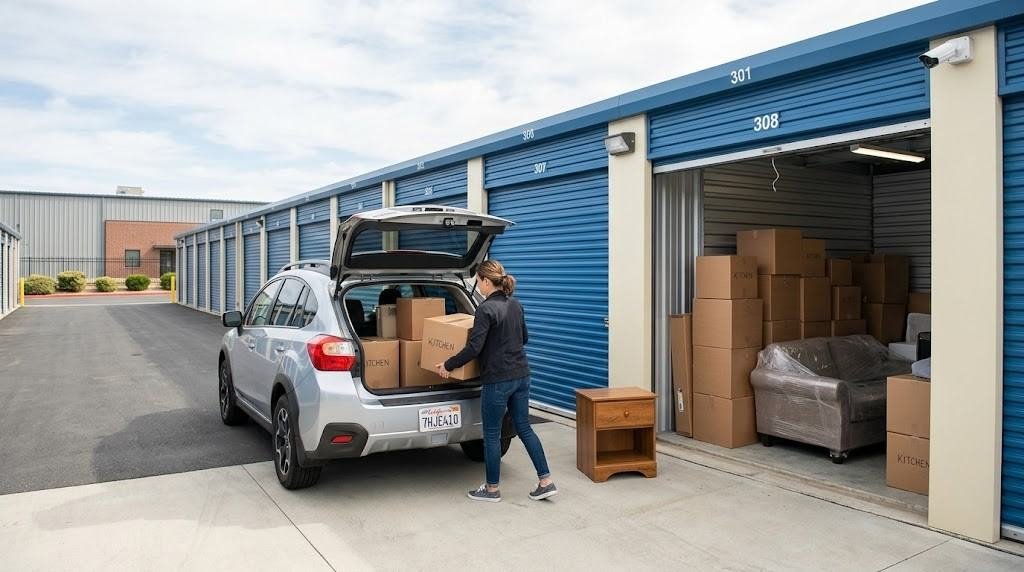
Extra Space Storage vs Other Storage Options
Choosing the wrong type of storage costs more than choosing the wrong size. These comparisons help you match the storage type to your situation.
Self Storage vs Warehouse Storage
Self storage suits people and small businesses that want their own lockable space and can handle their own packing and lifting. Warehouse storage suits pallets, bulk stock and companies that need handling, inventory tracking or shipping services.
Standard vs Climate-Controlled Storage
Standard units cost less and suit sturdy items such as tools, plastic bins and outdoor gear. Climate-controlled units protect sensitive belongings like electronics, wood furniture and documents, and they cost more each month.
Personal vs Business Storage
Personal storage is about clearing space at home and usually needs a small unit. Business storage is about shelving, access hours and staying organized, and it often needs a bigger unit with easy loading, such as drive-up.
Short-Term vs Long-Term Storage
Short-term rentals cover moves, renovations and study breaks. For long-term use, review the rate at each renewal period, and ask whether a longer commitment brings any discount. If you have not opened the unit in a year, it is time to review what is inside.
Tips for Getting the Most From Your Storage Unit
Pack and Label Items Properly
Uniform boxes stack better and survive longer. Label them on two sides with contents and room, and keep the label facing the aisle. Avoid overfilling boxes, since a box that is too heavy will burst or crush the one below.
Keep Frequently Used Items Accessible
Put the things you may need at the front and leave a walkway down the middle. Seasonal items such as holiday decorations or winter coats can go at the back, and you can swap them at the turn of the season.
Protect Sensitive Belongings
Lift items off the floor with pallets, and wrap mattresses and upholstery in breathable covers rather than plastic sheeting. Leave a small gap between the wall and your boxes, and never store anything damp, since moisture spreads quickly.
Make an Inventory of Stored Items
A simple list with photos helps with insurance claims and saves you from opening ten boxes to find one. Number the boxes, write the numbers in a spreadsheet or notes app, and update it whenever you add or remove something.
Review Your Storage Needs Regularly
Every few months, ask whether you still need the unit or the size. People often pay for years for things they never touch. If half the unit is empty, moving to a smaller size can cut the monthly cost right away.
Frequently Asked Questions About Extra Space Storage
What is Extra Space Storage?
It is a U.S. self-storage company founded in 1977 and based in Salt Lake City, Utah. It rents secure units to individuals and businesses across the country. It is also a REIT listed on the NYSE as EXR and a member of the S&P 500.
How does Extra Space work?
You choose a location, a unit size and any features you need, then rent by the month. Rental can be completed online, by phone or in person. You get access to your unit through the facility, and you can visit within the site’s access hours.
How much does Extra Space Self Storage cost?
Prices depend on location, unit size and features such as climate control. Because of that, a single price would be misleading. Ask the specific facility for a written quote, and confirm the first-month cost, administration fee, insurance and any later rate changes before you sign.
What size storage unit do I need?
A 5 x 5 suits a closet’s worth of items, a 5 x 10 suits a mattress and boxes, and a 10 x 10 suits a one-bedroom apartment. Larger homes need 10 x 15 or 10 x 20 units. Confirm with the facility’s size guide and leave room for an aisle.
Does Extra Space offer climate-controlled units?
Yes, climate-controlled units are among the options, though availability varies by location. They protect electronics, wood furniture, documents and artwork from heat and humidity. Ask the facility whether the whole building is climate controlled or only certain units, and how the price compares.
Can businesses rent Extra Space units?
Yes. Businesses use units for inventory, equipment, records and vehicles. Larger units and drive-up access suit sellers and contractors. A unit should not be used as a registered business address, so ask the facility about its rules if you need one.
Can I store a vehicle with Extra Space Self Storage?
Vehicle storage is available at suitable locations, covering cars, RVs and boats. Confirm size limits, access hours and insurance requirements with the site. Availability differs between facilities, so call the location you plan to use before you drive over.
What can I not put in a storage unit?
Illegal goods, flammable or combustible materials and perishable food are not allowed. That includes fuel, paint thinners and open food. Your rental agreement lists every restricted item, so read it before you pack, and ask the facility if you are unsure about something unusual.
Can I live in a storage unit?
No. Storage units are for belongings, not for living, sleeping or running a business from. They are not designed or permitted for that, and the rental agreement will say so. If you need short-term housing while moving, look at rentals instead.
How do I rent a unit?
Find a location, choose a size and features, then reserve online, by phone or in person. Read the rental agreement, ask about the total move-in cost, and add your own lock. Keep your unit number and access code somewhere safe.
What is the extra space storage aktie ticker symbol?
The ticker symbol is EXR, and the shares trade on the New York Stock Exchange. German investors may see the same company listed under a different trading code on a European exchange, so search by company name and check the exchange before you place an order.
Does EXR pay a dividend (Extra Space Storage Dividende)?
Yes. The extra space storage dividende has been paid on a quarterly schedule, according to company announcements. The amount can change, so check the latest declaration on the company’s investor relations page rather than relying on an older figure. This is not financial advice.
Where can I find Extra Space Storage Aktienfinder data?
Search for extra space storage aktienfinder pages, or look up EXR on Aktienfinder, to see dividend history and growth. Then compare the numbers with the company’s own filings, because third-party sites can lag behind the latest results.